
Core technologies
Cooling energy storage.
Boosts performance in critical energy processes.
Imitated, never matched
TESTIAC® (Thermal Energy Storage for Turbine Inlet Air Cooling) is the brand that names the original technology developed by APINA since the year 2000.
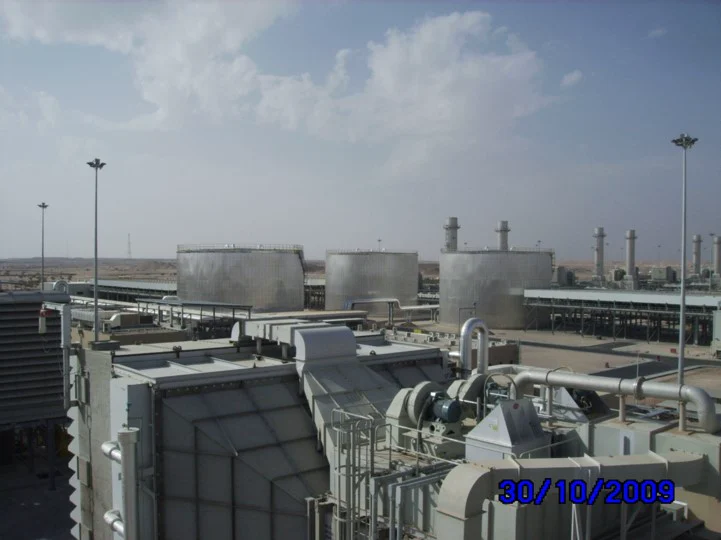
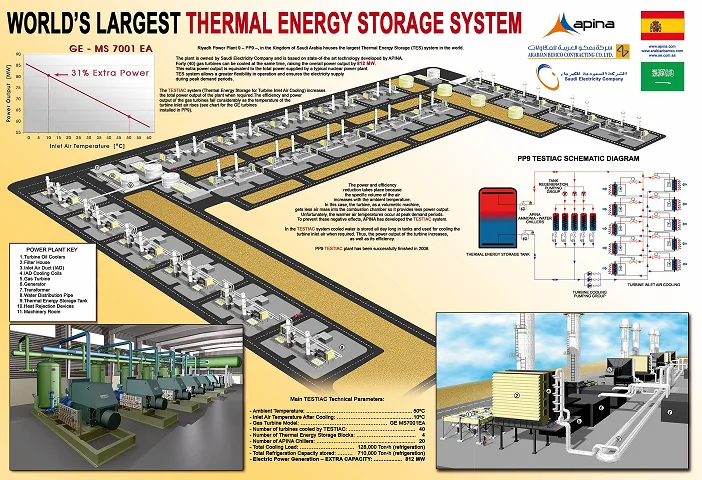
TESTIAC® systems have proven to be a pioneering technology, both in concept and in deployment across the energy sector, with the world's largest TIAC installation, known as PP9 (Power Plant 9).
It can be implemented with either compression systems or absorption plants. It increases power-generation capacity at peak-demand hours, improves the efficiency of gas turbines and reduces greenhouse-gas emissions. For this it has been recognised at installations such as DEWA's Station L (UAE).
Why heat robs turbines of power
TESTIAC® originates in a physical problem of gas turbines for power generation, all the more acute the hotter the plant's location. At high ambient temperatures the air has a greater specific volume: the mass of air entering the turbine —a volumetric machine— is smaller, and compressing it takes more work. The result is a loss of performance and power that grows with the intake-air temperature.
The effect hits precisely at peak hours, when maximum demand, the highest electricity price and the risk of supply cuts coincide —on top of failing to meet the power guarantee committed to the grid.
Cooling the intake air
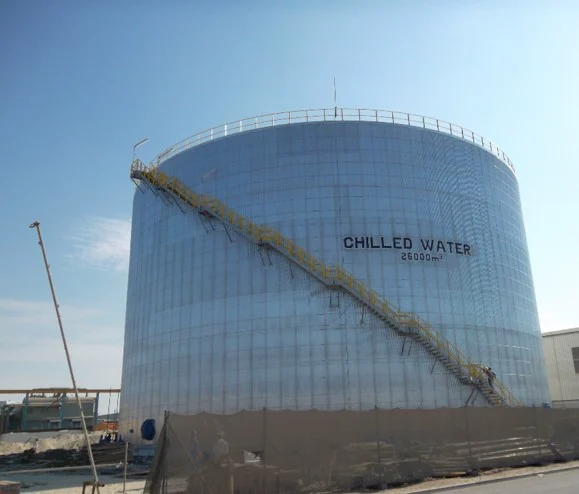
To counter the ambient heat and return the turbine to its optimal operating point, APINA develops intake-air cooling systems tailored to each plant. TESTIAC® adds thermal energy storage: it charges cold during off-peak hours and releases it as a power boost at peak-demand hours.
Each installation relies on APINA's own developments —the apinadrop (droplet catcher) and the apinatrap (water trap)— and on cooling coils designed specifically for each project.
What TESTIAC® delivers
More generation at peak
Greater power-generation capacity at peak-demand hours.
More efficient turbines
Cools the intake air and recovers power in hot conditions.
Fewer emissions
Reduces the greenhouse-gas emissions of power generation.
Compression or absorption
Compatible with both technologies depending on the project.
ATESTIAC — cooling from exhaust heat
When TESTIAC® is implemented via the absorption route, the installation recovers the energy the turbine discards —especially in simple-cycle turbines, where much of the heat is lost to the atmosphere— and recycles it as cooling power.
On that idea, APINA's engineering department has developed ATESTIAC technology. At its heart is APINA's absorption module, which uses the heat of the turbine's exhaust gases to generate the required cooling with minimal electricity consumption —only that of the auxiliaries. That near-zero consumption allows the module to be used even at peak-demand hours.
This squeezes the most out of each existing turbine: depending on the model and ambient temperature, the power generated per turbine can increase by more than a third.
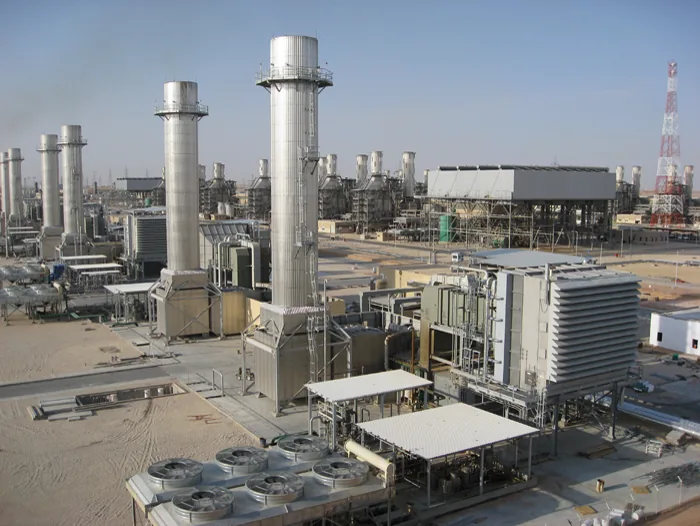
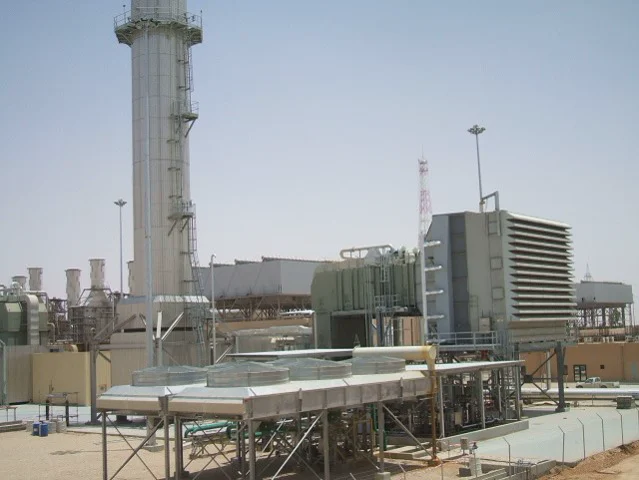
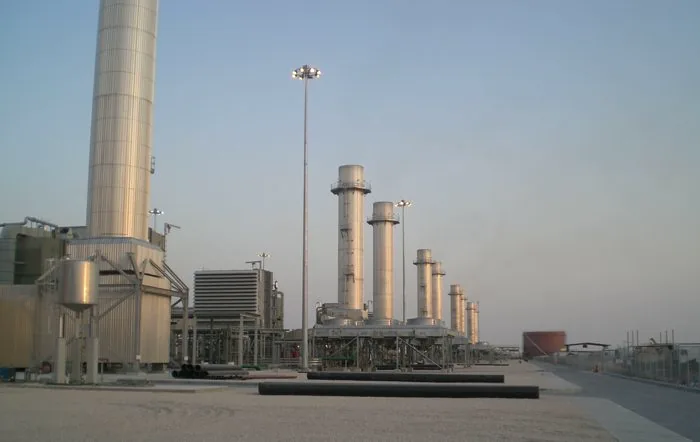
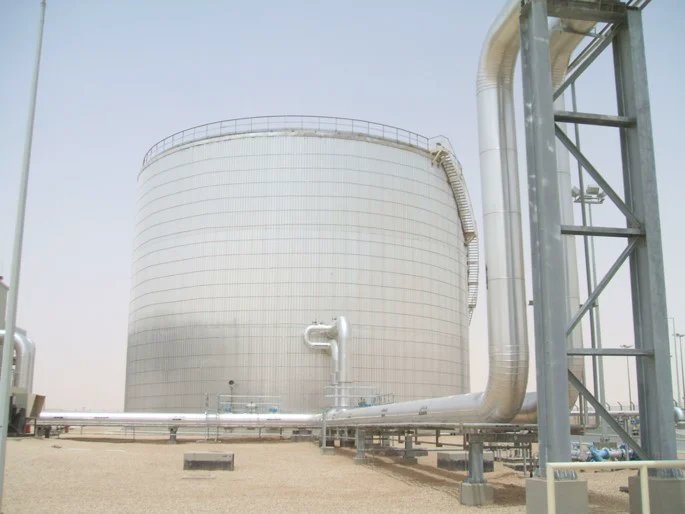
Reference projects
| Project | Country | Power | Turbines | + Power |
|---|---|---|---|---|
| Motril cogeneration | Spain | 9,000 kW | 1 | +30 % |
| Qassim PP II | Saudi Arabia | 50,500 kW | 5 | +43 % |
| Juba PP | Saudi Arabia | 53,000 kW | 9 | +35 % |
| Hail PP | Saudi Arabia | 66,500 kW | 5 | +35 % |
| PP9 · Block C | Saudi Arabia | 114,000 kW | 10 | +35 % |
| PP9 · Block D | Saudi Arabia | 114,000 kW | 10 | +35 % |
| PP9 · Block E | Saudi Arabia | 95,000 kW | 8 | +35 % |
| PP9 · Block F | Saudi Arabia | 135,000 kW | 12 | +35 % |
| Jebel Ali (DEWA) | UAE | 78,000 kW | 3 | +14 % |
Turnkey TESTIAC® projects (Full Turnkey).
More in core technologies