
Sectors & industries
Cooling for data centers.
Critical, continuous cooling for infrastructure that cannot stop.
Mission-critical cooling for data centers
The cooling of a data center allows no stoppages: any failure compromises the service. APINA brings to this environment the same high-reliability industrial cooling engineering that operates on vessels and critical energy infrastructure, with natural refrigerants, redundancy and precise control.
The rise of AI has driven up rack density —from 15 kW to 80-120 kW—, making liquid cooling (direct-to-chip and immersion) the standard. Behind those systems, an efficient, continuous central cold production is needed: that is where APINA's technology fits.
The challenge: energy, water and heat
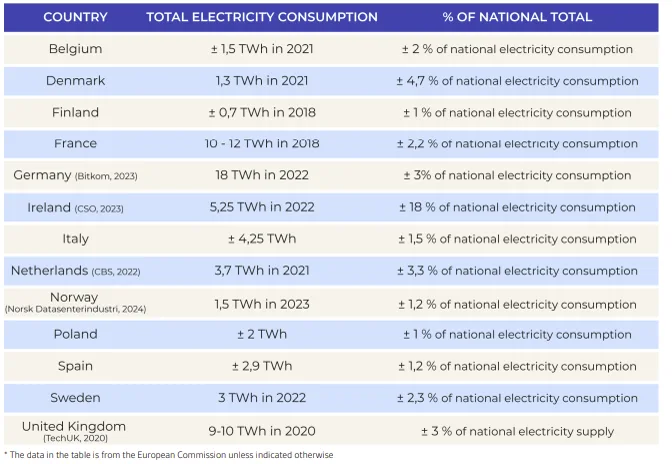
Data centers already consume around 1.3 % of the world's electricity —between 240 and 340 TWh per year— and the figure is soaring with artificial intelligence. Electricity is, by far, their largest operating expense.
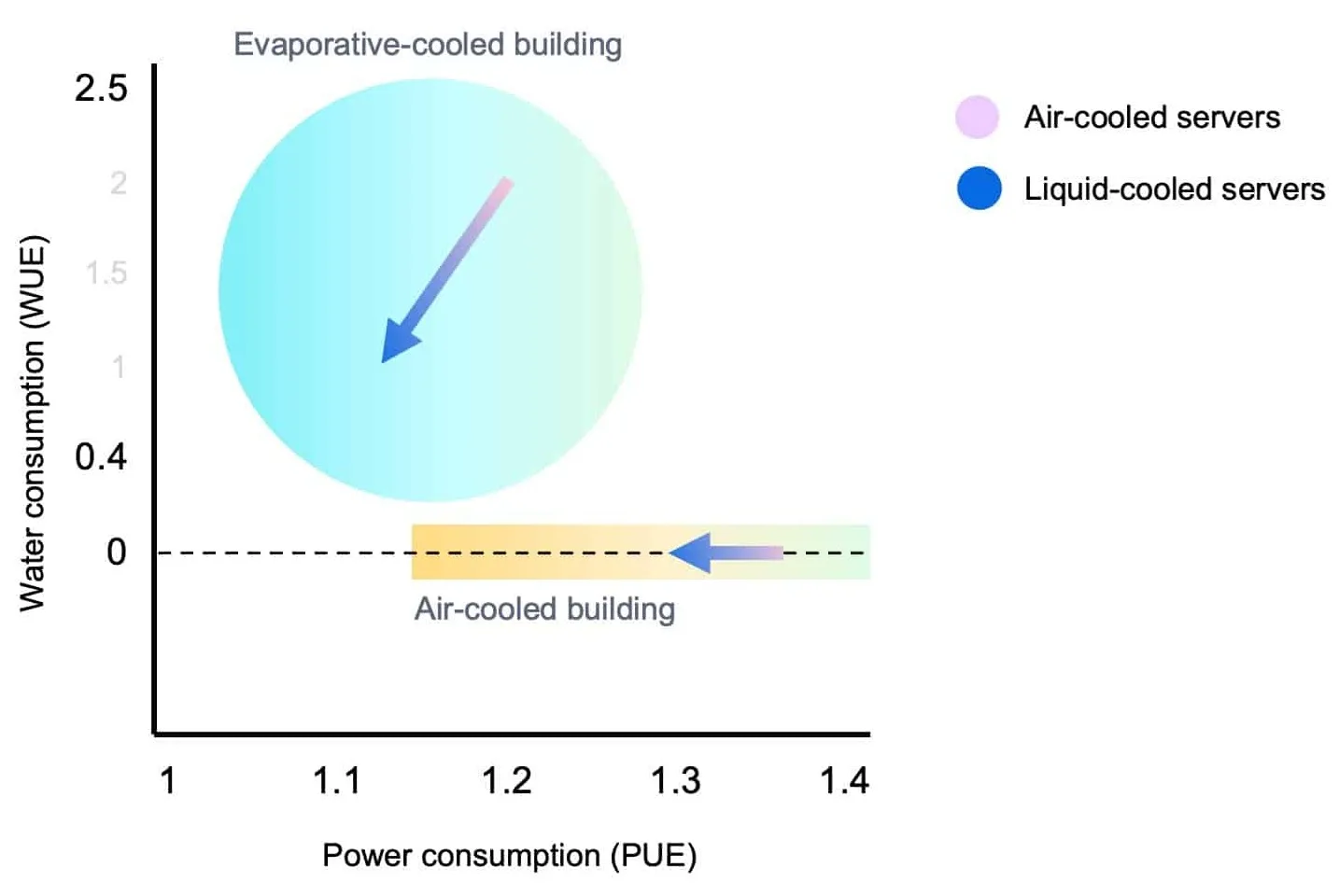
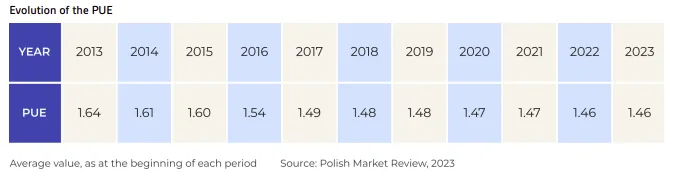
Cooling defines two metrics: PUE (total energy versus compute energy) and WUE (litres of water per kWh). Air uses more energy; water and immersion, less energy but more water. And efficiency has stalled: the average PUE has barely dropped since 2018.
Waste heat is an opportunity
The heat a data center expels —around 28 °C— is usually wasted. It is exactly the kind of low-temperature energy APINA turns into value: absorption refrigeration that produces cooling from that heat, or recovery to feed district-heating networks. Waste becomes a resource.
Why APINA in data centers
Natural refrigerants
Ammonia (NH₃) chillers: GWP 0, ODP 0 and high efficiency. Ready for the European ban on high-GWP fluorinated gases (F-Gas, 2027).
Heat recovery
Reuse of the data center's waste heat for district-heating networks or industrial processes, in line with the European Energy Efficiency Directive.
Absorption refrigeration
Cooling from waste heat or trigeneration, with minimal electricity consumption: lower OPEX and better overall PUE.
Thermal storage (TES)
TESTIAC® technology to shift the cooling load, shave peaks and add resilience and flexibility versus the grid.
High density / AI
Chilled-water plants that feed liquid cooling (direct-to-chip and immersion) for high-density clusters.
Reliability and control
Redundant design (N+1), end-to-end SCADA remote management and predictive maintenance. A legacy of mission-critical environments.
Regulation accelerates the change, globally
The pressure is global. The European Energy Efficiency Directive (2024) requires large data centers to report and reuse their heat; the F-Gas Regulation bans high-GWP refrigerants from 2027; and markets like Germany demand a PUE ≤ 1.3. From North America to the Middle East, the direction is the same: natural refrigerants and heat recovery are no longer an option but a requirement.
Applications
Central chilled-water production
For CRAH/CRAC units and for liquid cooling.
Liquid cooling and high density
Chilled water for direct-to-chip and immersion in AI clusters.
Campus district cooling
Centralised cooling for campuses and data-center clusters.
Waste-heat recovery
Reuse of heat for district heating or industrial processes.
Storage and peak shaving
TES to shift load and provide operational resilience.
More in sectors & industries